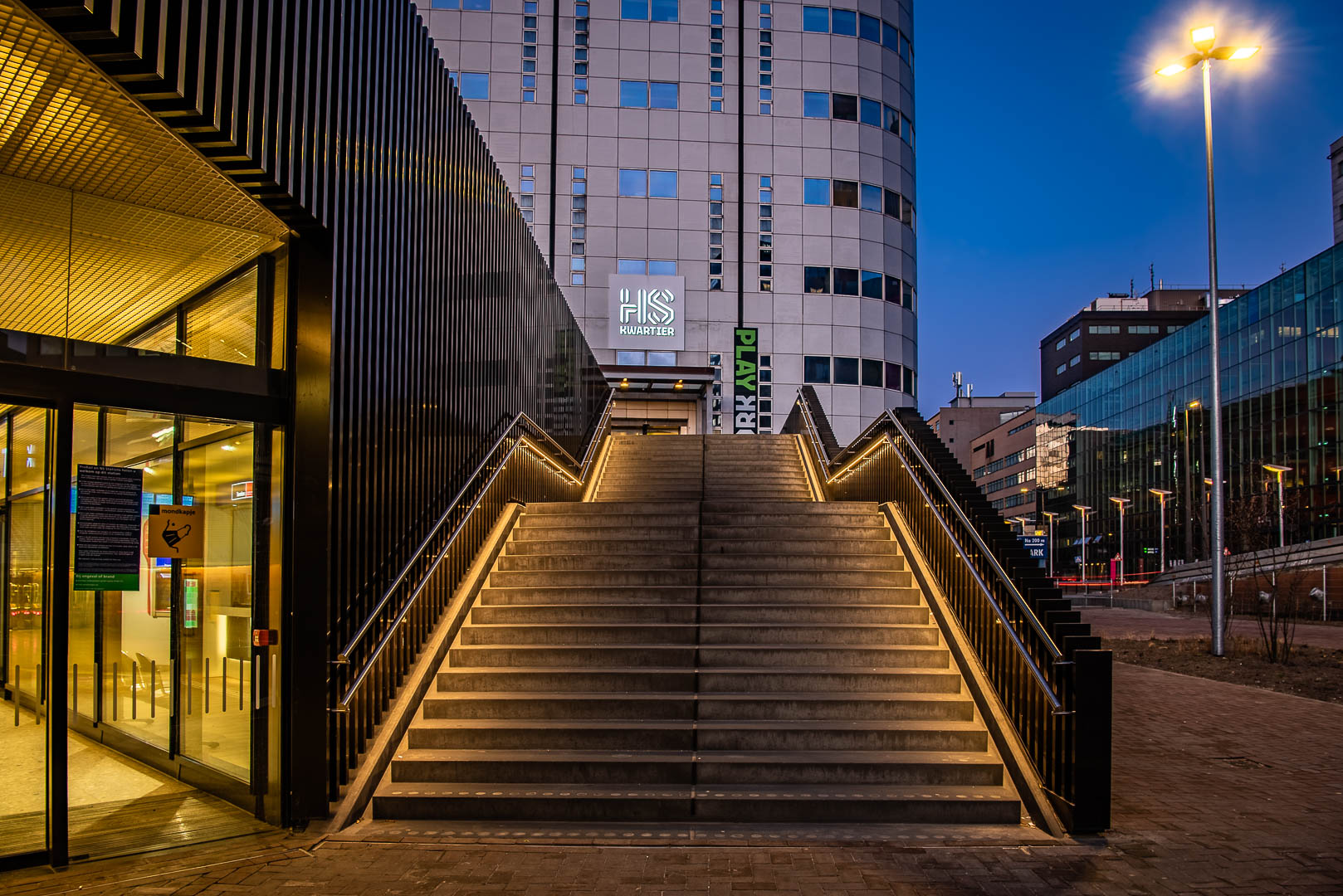
Train stations are the calling card of a city or region. They welcome thousands of travelers every day and play a major role in shaping people’s first impression of a place. Station lighting plays a central role in this: it’s not just about providing enough light, but about a combination of safety, comfort, and aesthetic appeal. Spoorbeeld’s Handbook on Station Lighting (2021) emphasizes that lighting at stations must fulfill multiple functions simultaneously: public safety, wayfinding, comfort, and architectural quality. For designers and specifiers, this means that lighting can no longer be viewed as a separate element, but rather as an integral part of the station’s architecture.
Stations as Social Hubs
A station—whether for train or subway connections—is more than just a boarding point: it is a meeting place, a transfer hub, and an urban icon. It is precisely in this context that lighting determines how users experience the space. Well-designed station lighting provides clarity and recognizability, thereby enhancing social safety.
Research in European cities (ETRR, 2024) shows that travelers feel safer when stations are brightly and evenly lit, with clear landmarks. It’s not just about illuminance levels, but above all about consistency and avoiding dark areas. A poorly lit bike rack or underpass can negatively impact the entire experience of a station.
What should you take into account in the specifications?
The Station Lighting Handbook (Spoorbeeld, 2021) states that lighting in all areas of a station—from platforms and concourses to tunnels and bicycle parking facilities—must contribute to social safety, wayfinding, and comfort. For architects and specifiers, this requires a holistic approach in which every component is carefully addressed in the specifications. Based on these principles, several possible solutions exist in practice:
- Lighting fixtures and platform lighting: Ceilings and canopies require uniform light distribution without glare, so that passengers can move about safely.
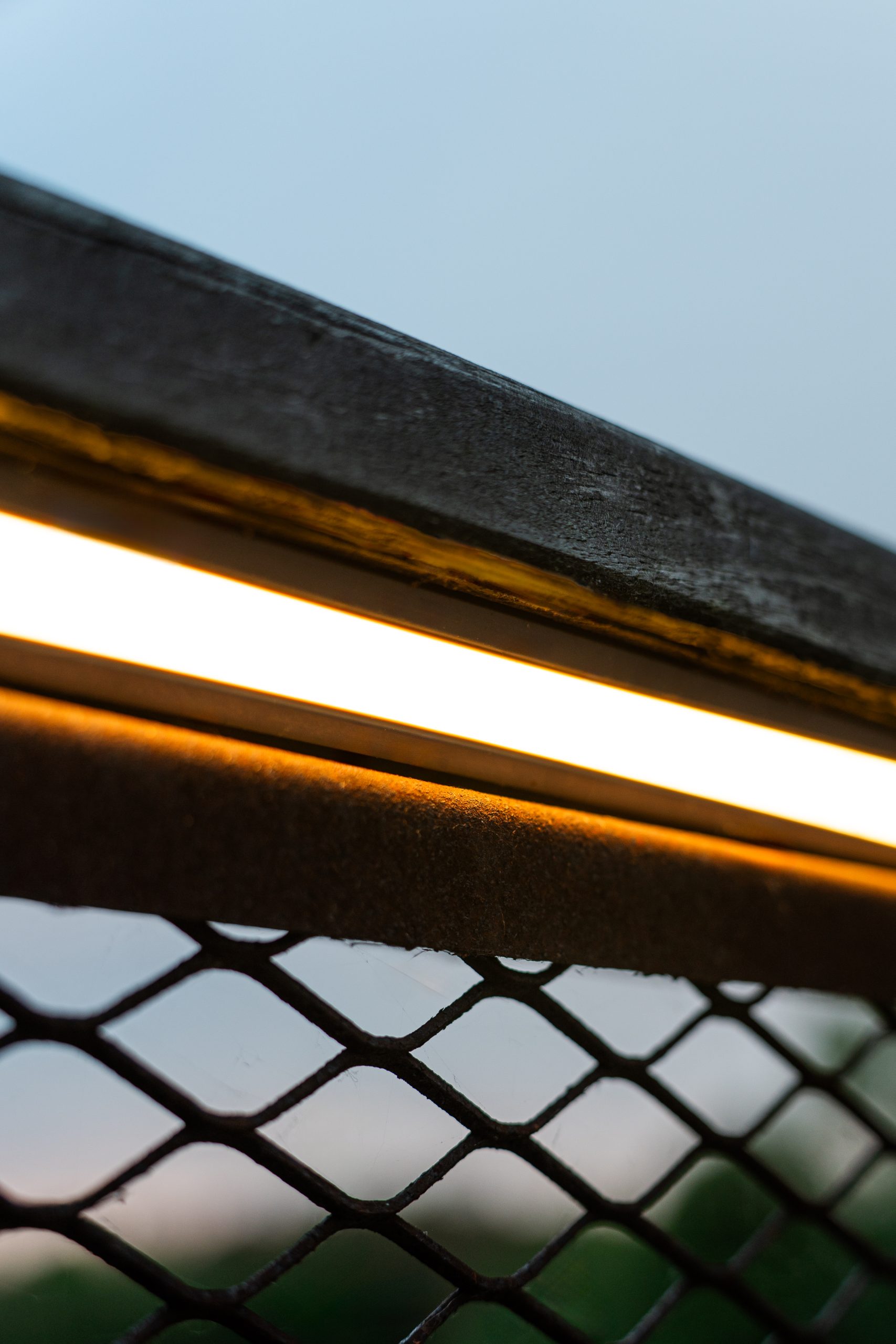
- Railings and balustrades with light lines: Integrated light lines highlight the edges of platforms and stairs and aid in orientation.
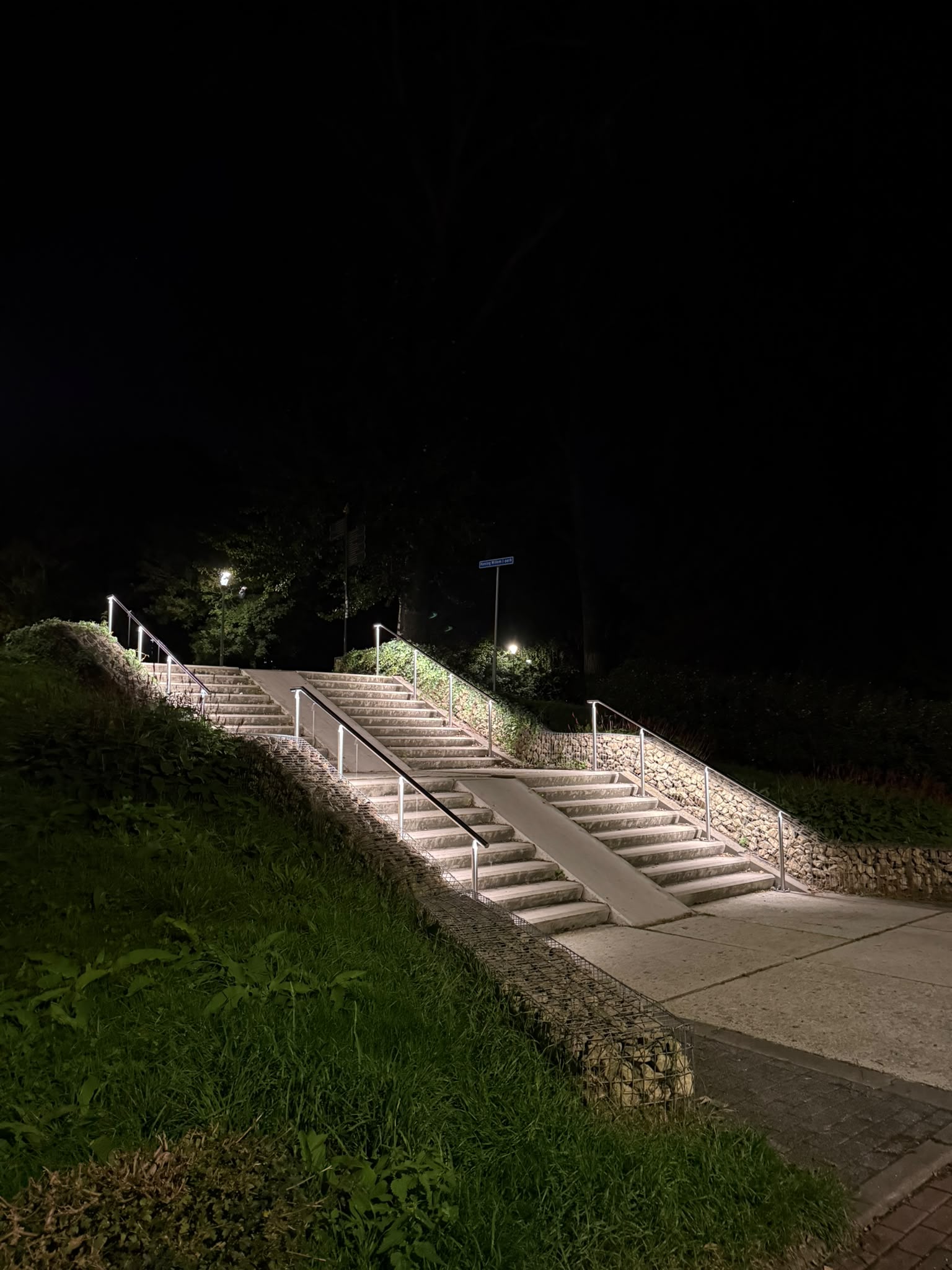
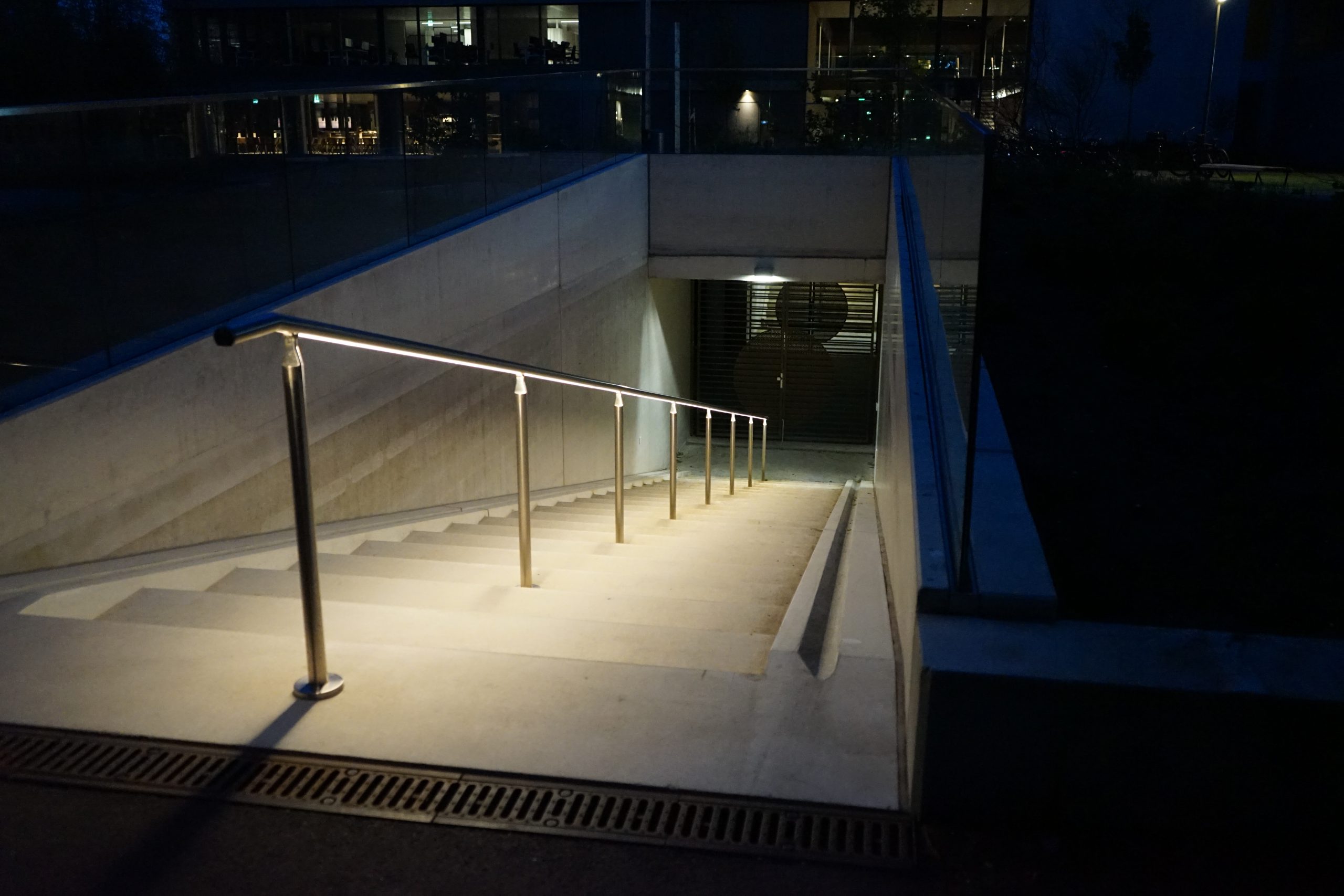
- Stair Railings: Integrated LEDs in handrails prevent falls and enhance comfort. This type of wayfinding lighting makes steps visible without the need for additional fixtures.
- Bicycle racks and bike parking areas: Lighting is often an underestimated consideration here. Well-lit parking areas improve visibility and reduce the risk of theft.
- Tunnels and passageways: transition zones where travelers are particularly susceptible to feelings of insecurity. Uniform tunnel lighting and smooth light patterns promote a sense of flow and social control.
Including these zones and applications in a single set of specifications prevents a fragmented approach to station lighting and ensures consistency in design and implementation.
Integrated LED in Station Lighting
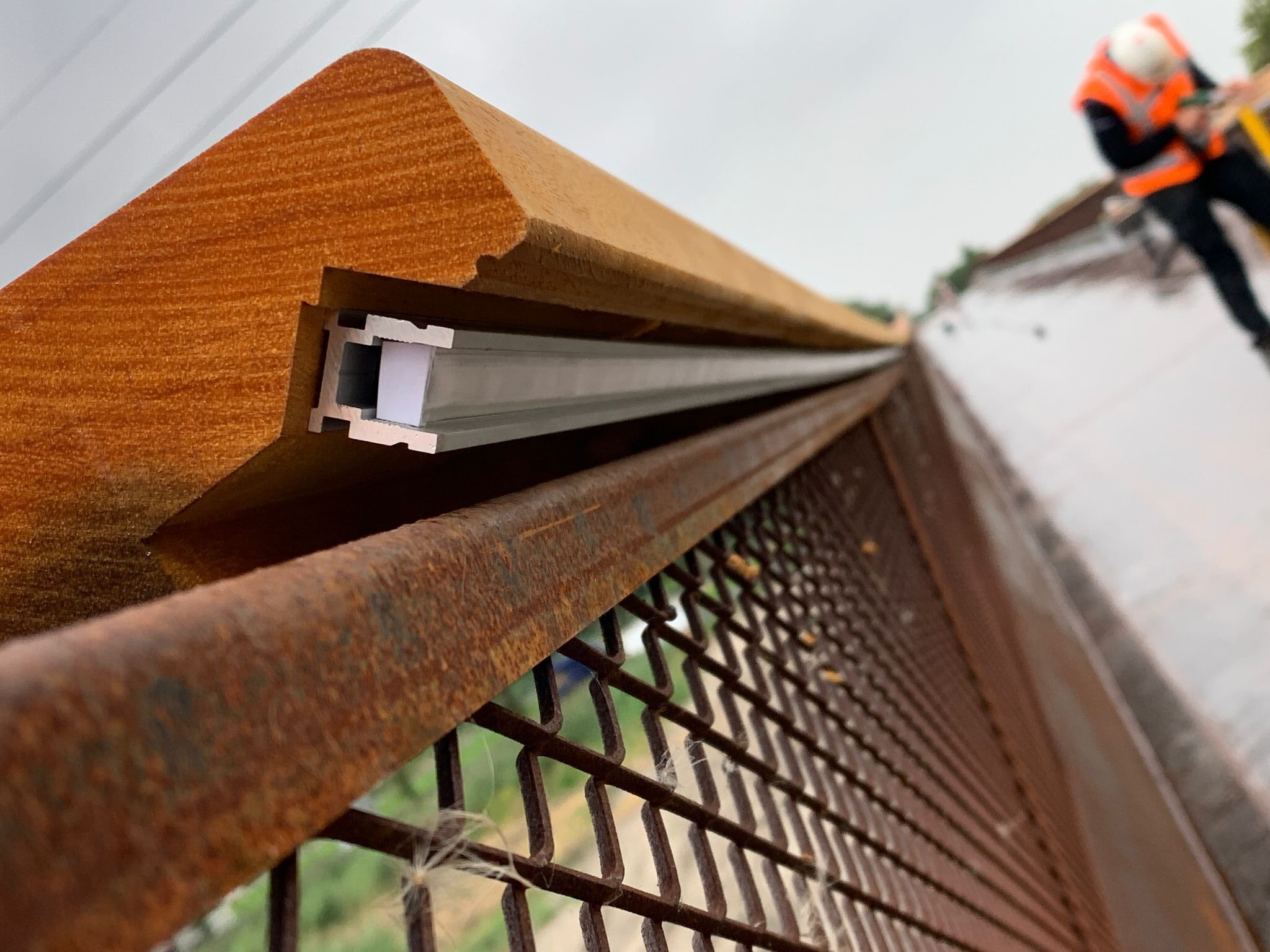
While many providers still approach station lighting using separate fixtures and poles, practical experience shows that integrated LED solutions offer new advantages. By making lighting an integral part of the structure, a comprehensive solution is created that better aligns with the design goals of modern stations. Advantages of integrated station lighting:
- Orientation and safety: light lines in balustrades and handrails make routes and changes in level visible.
- Consistency: No dark areas, but continuous sightlines that give travelers a sense of security.
- Sustainability: LED lighting is energy-efficient and low-maintenance, which reduces the total TCO (Total Cost of Ownership).
- Architectural integration: Lighting enhances the design, rather than having poles or fixtures dominate the view.
- Smart features: dimmable and sensor-controlled, so that lighting adapts to usage and the time of day.
Station Lighting in Development
Station lighting is evolving: from individual fixtures to integrated light lines that combine safety, comfort, and aesthetics. Guidelines such as the Station Lighting Manual emphasize that lighting is a key factor in public safety and the overall experience. For architects, specifiers, and public clients, this means:
- A set of specifications that combines architectural and electrical engineering,
- lighting that enhances visibility and public safety,
- solutions that are energy-efficient and low-maintenance,
- and a station design in which lighting is architecturally integrated.
With integrated station lighting, light is no longer a separate addition but an integral part of the architecture and the passenger experience. View reference projects for stations here.