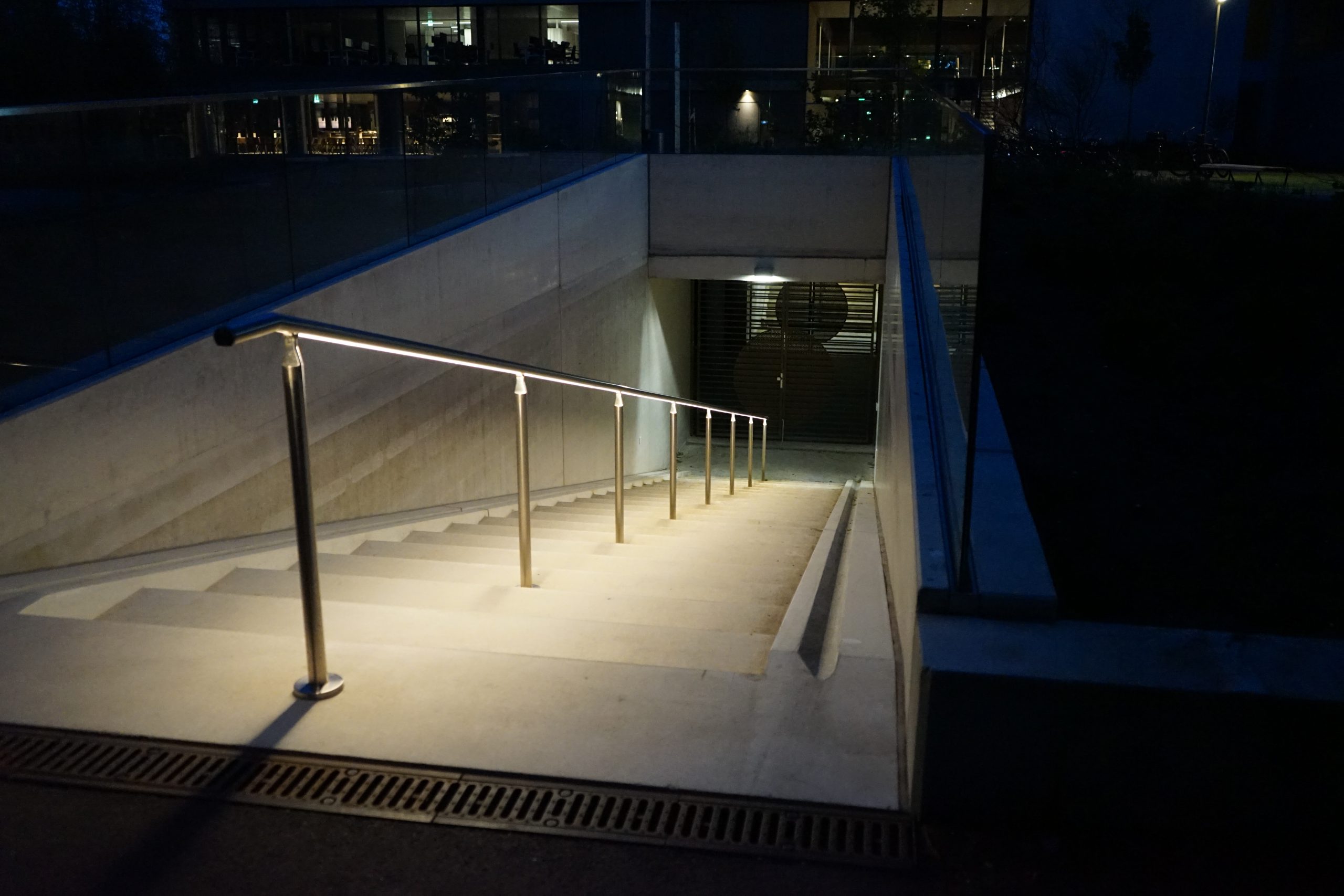
Social safety is becoming increasingly important in project development, urban renewal, and public infrastructure (Overheid.nl, 2025). Street lighting is not only a matter of utility but also of experience. Lighting marks routes, stairways, and entrances. It contributes to visibility, orientation, and the prevention of accidents or undesirable situations. In some streets, the lighting feels inviting and well-lit; in other areas, you notice just how quickly shadows and dark corners undermine the sense of safety. Lighting is not merely a prerequisite here, but a determining factor in how people experience and use an environment. The question is: how can lighting in public spaces mean more than just installing light fixtures? And how can traditional street lighting be improved? Integrated LED solutions offer new possibilities.
Improving street lighting: from lampposts to light lines
Streetlights have been the backbone of public lighting for decades. They can be installed quickly and cover a large area. However, there are also limitations that are increasingly demanding attention.
- Dark zones: The distance between light poles can create areas of shadow. In a park or along a bike path, this reduces visibility and, consequently, social control.
- Light pollution and light nuisance: High-mounted fixtures often emit light over a wider area than necessary. This not only leads to energy waste but also disrupts circadian rhythms and nature. In Flanders, it is estimated that nearly 30% of public lighting is inefficient due to improper light distribution (INBO, 2022).
- Maintenance and costs: Each pole requires its own foundation, cabling, and periodic inspection. For municipalities and provinces, this results in a structurally high TCO (Total Cost of Ownership).
This does not mean that streetlights will disappear. For wide thoroughfares and open squares, they often remain the most practical solution. But where wayfinding, visibility, and the user experience are key—such as on bridges, at train stations, or in parks—lighting integrated into structural elements can be a valuable addition. So the discussion isn’t about whether, but how we can use lighting more intelligently in public spaces. Integrated light lines complement traditional urban lighting and offer new design freedom.
Architectural Integration and Perception
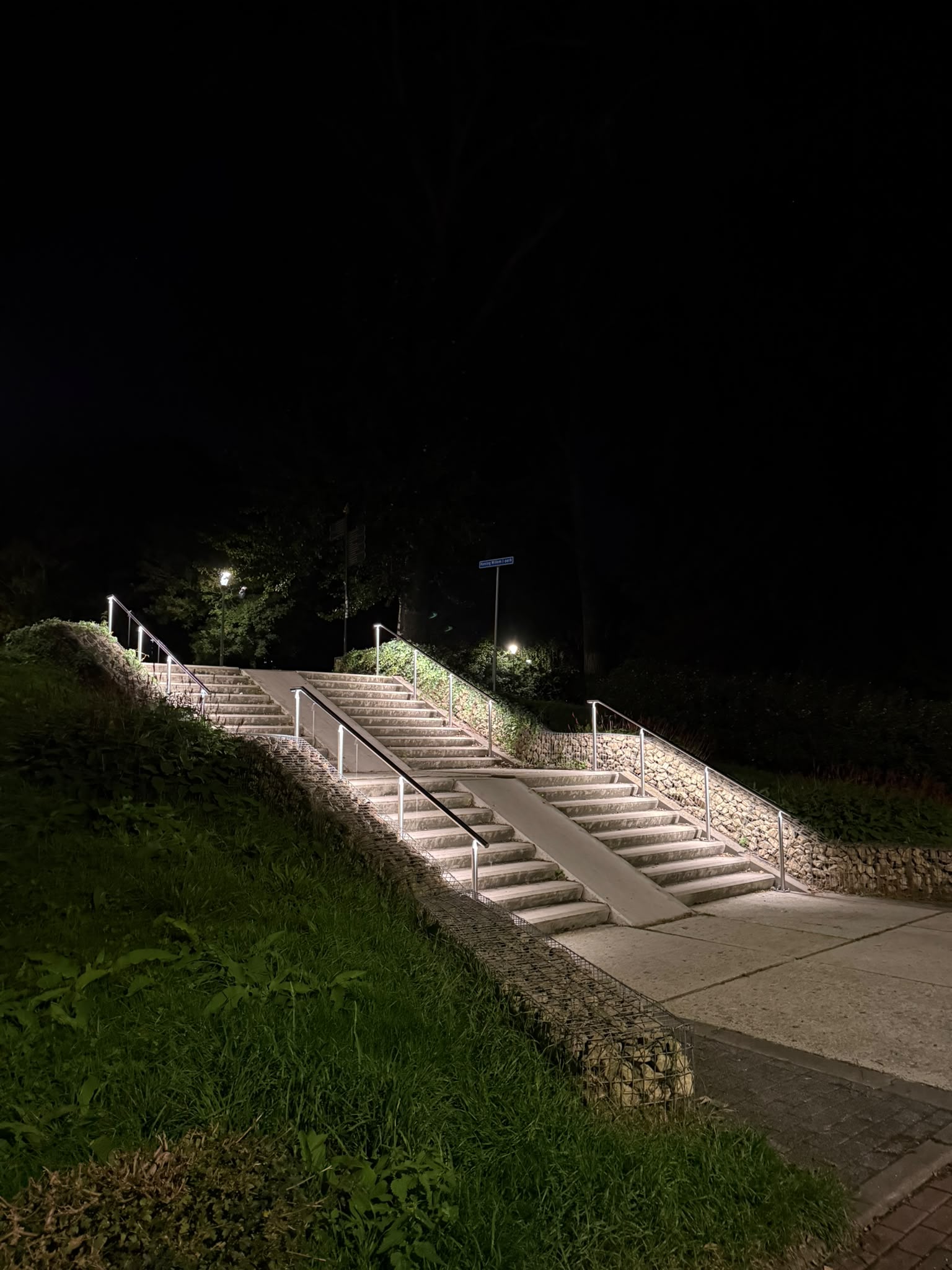
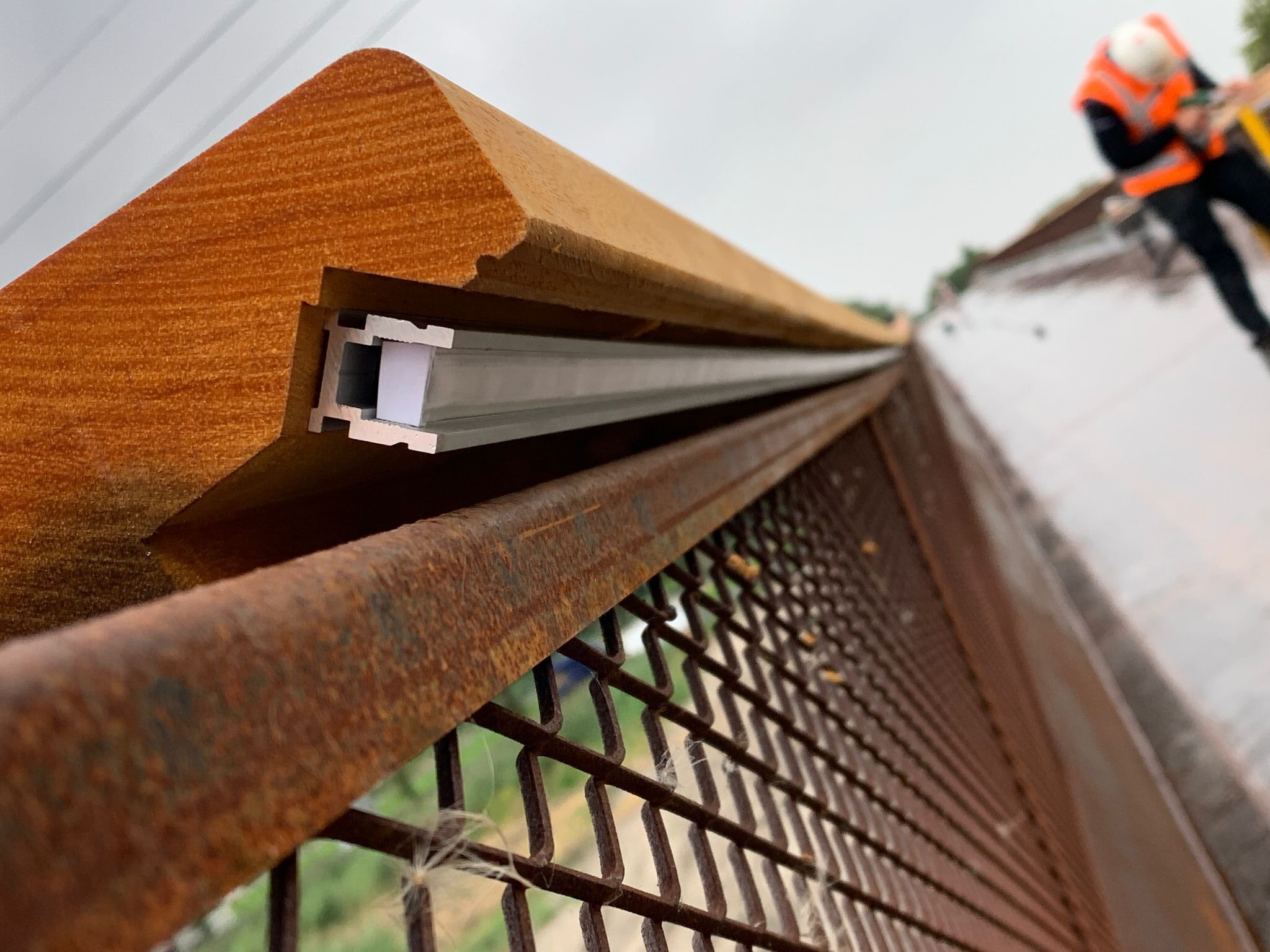
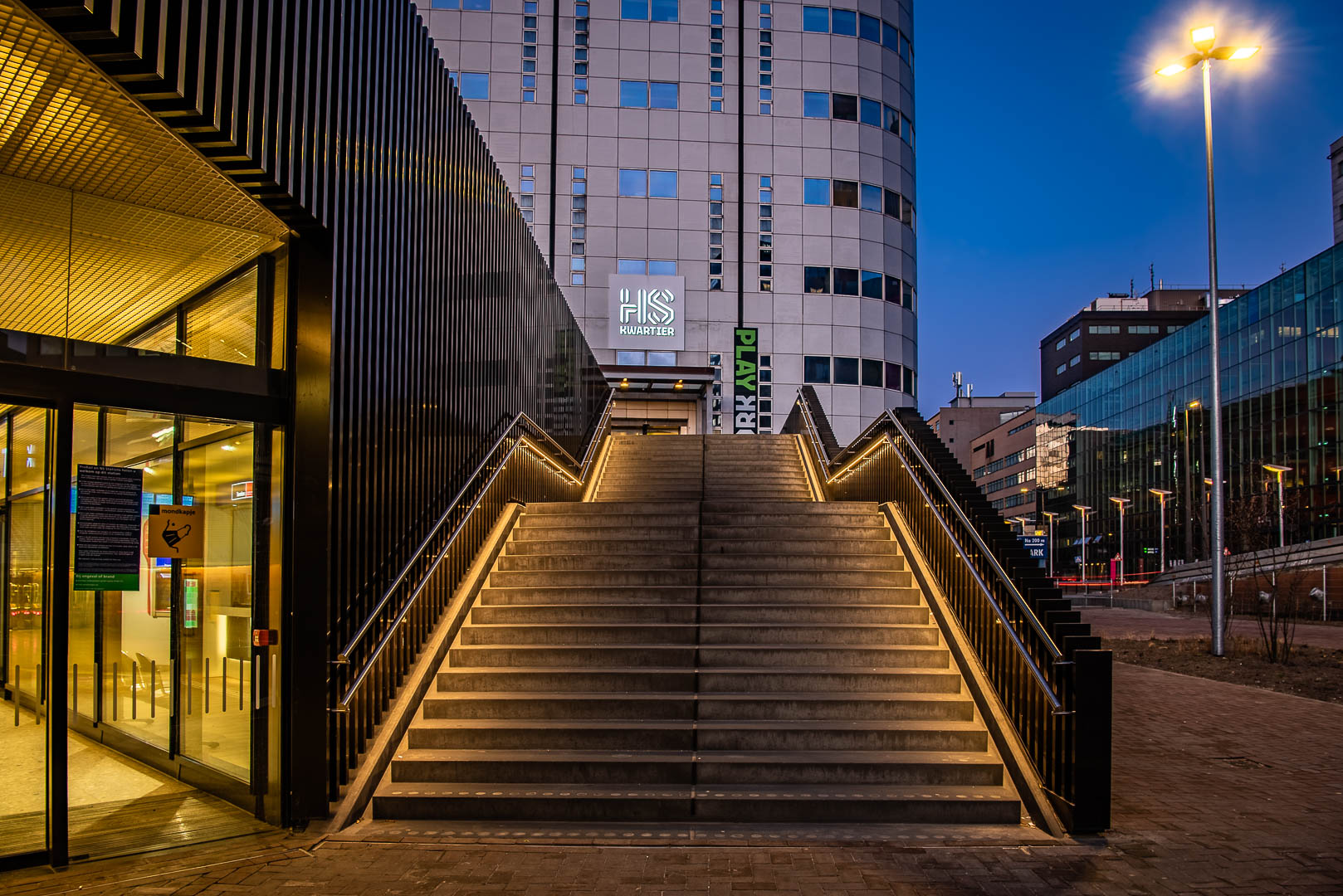
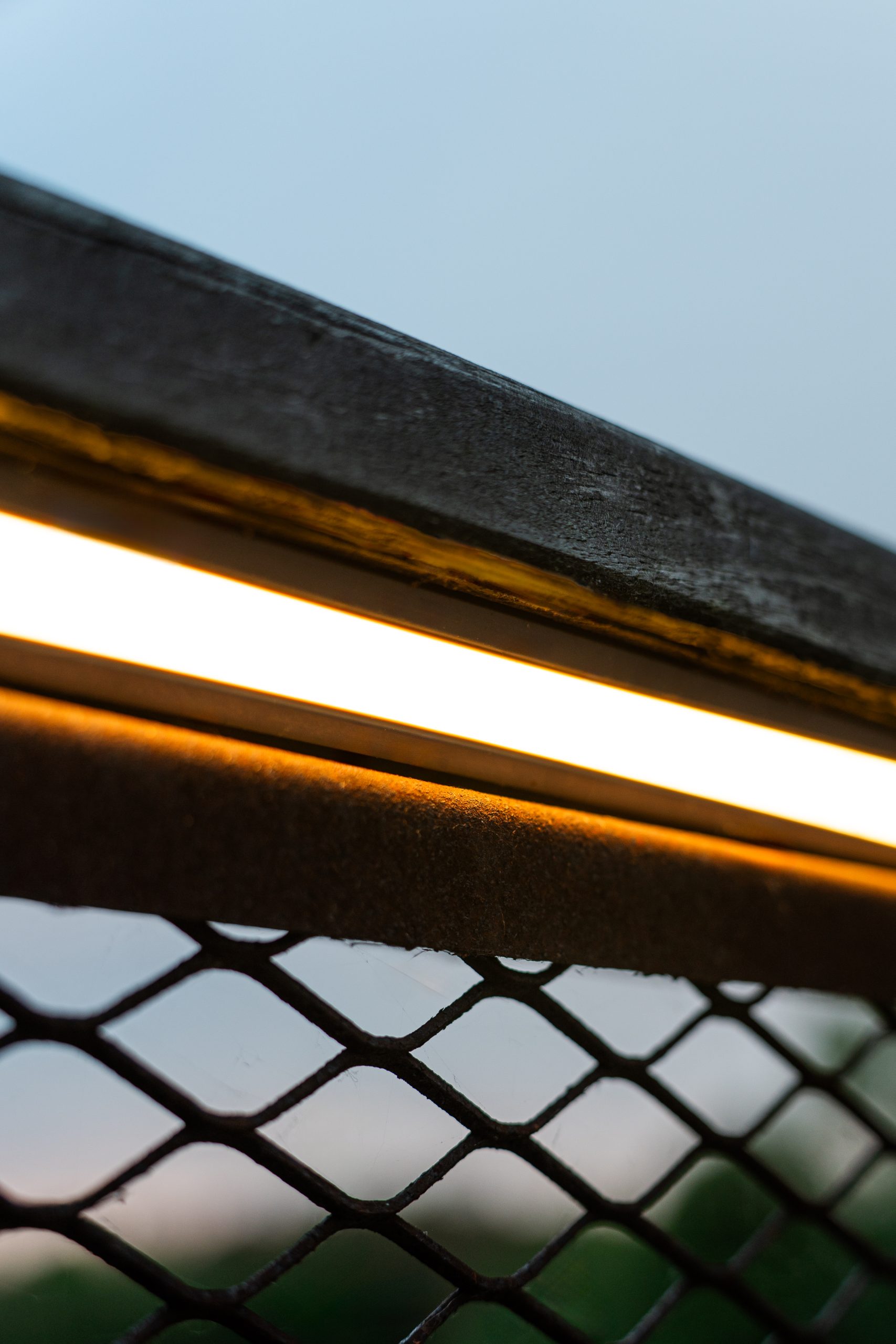
Integrated LEDs in handrails, balustrades, or railings provide a different type of lighting. The light follows the structure and marks the route at eye level or directly along the path. This offers several advantages:
- Consistent sight lines: Users experience a uniform band of light without any dark gaps.
- Directional lighting: Asymmetric LED technology directs the light where needed, minimizing glare.
- Vandal-resistant: Integrated lighting is better protected than freestanding fixtures.
For users, the effect is immediately noticeable: the route feels logical, clear, and safe. This has already been implemented in station projects: balustrades with LED markings guide passengers without the need for additional poles. For designers, this means that lighting becomes an integral part of the architecture, rather than a standalone object. The result is lighting that is not only practical but also contributes to social safety in public spaces.
Enhancing Social Safety
Social safety is not just about objective safety, but also about perception. An evenly lit environment without dark areas is demonstrably perceived as safer. Research in Flanders shows that citizens explicitly link lighting to their sense of safety when traveling at night (Province of Antwerp, 2022).
International research supports this view. A 2022 systematic review concluded that improved street lighting led, on average, to a 14% decrease in crime in the areas studied (ProHic, 2022). There are also indications closer to home: a study by the Vrije Universiteit Brussel (2024) shows that completely turning off public lighting at night can actually increase the number of traffic accidents.
These findings make it clear: lighting goes beyond mere lighting technology. It is a design tool that influences behavior and strengthens social control in public spaces.
Practical Implementation of Public Space Lighting
For specifiers and architects, it is important that solutions comply with standards and can be integrated into existing processes. Integrated systems, such as handrails with LEDs, are therefore designed with an eye toward technical reliability:
- Materials: 304/316 stainless steel, optionally with a powder-coated or wood-grain finish.
- Lighting: choice of color temperatures, asymmetric light beams, and COB LED technology.
- Standards and certifications: IK10 impact resistance, IP68 waterproof rating, CE marking, and NEN-compliant.
- Maintenance: LED components can be replaced using a snap-in system, without the need for major structural work.
Public space lighting is a field in constant evolution. Traditional masts and lampposts remain important, but integrated LED solutions demonstrate that there are alternatives that better address public safety, energy efficiency, and the quality of public spaces. Integrating lighting into structural elements creates consistent sightlines, reduces light pollution, and provides a robust solution for public spaces.
For architects, specifiers, and public clients, this means, in concrete terms:
- easier to specify in a single set of specifications,
- less maintenance and lower TCO,
- greater design freedom without compromising safety.
Would you like to know how ILLUNOX lighting can support public spaces in your project? Take a look at our reference projects or check out the downloads.